Think you know Dayton? Think again. We’re continuing our “Discover the Unexpected” series with a splash, a climb, and a dash of gravity-defying fun. Whether you’re a thrill-seeker, a weekend wanderer, or just someone tired of the same ol’ summer activities, Dayton’s got some wild cards up its sleeve. Here are 7 unexpected recreation experiences that prove this city is anything but average!

No ocean? No problem. Surf Dayton is redefining inland adventure with stand-up paddleboarding, whitewater kayaking, and even river surfing—right in the Great Miami River. Whether you’re a pro paddler or trying it out for the first time, Surf Dayton makes waves in all the right ways.
🌟Unexpected Factor: River surfing in the Midwest? That’s next-level summer.

Hidden among the trees at Aullwood Audubon are massive, whimsical trolls crafted by artist Thomas Dambo, built entirely from recycled materials. These gentle giants spark curiosity and are perfect for families, nature lovers, and selfie enthusiasts alike. It’s an eco-adventure that’s both mysterious and magical.
🌟Unexpected Factor: Giant trolls in the woods? Yep, and they’re kind of adorable.

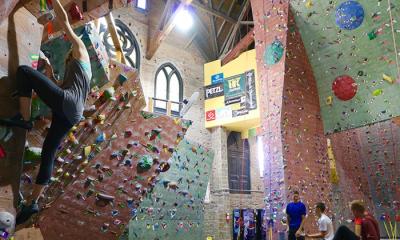
Housed in a beautifully restored 1890s church, Urban Krag offers indoor climbing walls that reach up to 56 feet high. Whether you’re bouldering or belaying, it’s the perfect vertical playground for climbers of all skill levels—and the stained-glass windows make it feel like a cathedral of adrenaline.
🌟Unexpected Factor: Rock climbing meets gothic architecture? Only in Dayton.

Tucked inside Cox Arboretum MetroPark is a 65-foot-tall tree tower with panoramic views that will make your jaw drop—and your Instagram pop. It’s a peaceful yet exhilarating climb, surrounded by lush gardens and butterfly habitats.
🌟Unexpected Factor: It’s like a treehouse for grown-ups. With better views.

This one’s for the two-wheeled rebels. Mike’s Bike Park is the Midwest’s largest indoor bike park, offering 50,000 square feet of ramps, jumps, and trails for BMX, MTB, and everything in between. Newbie? They offer rentals and lessons, too!
🌟Unexpected Factor: Ride like a pro—indoors, rain or shine.

Designed by Dayton native and pro skater Rob Dyrdek, this state-of-the-art skate plaza in Kettering blends street and park-style elements. Whether you’re perfecting your ollie or just rolling through, it’s a skater’s paradise with serious street cred.
🌟Unexpected Factor: A pro-designed plaza in a city park? That’s how Dayton rolls.

Paddlers, rejoice! Dayton’s downtown riverfront is home to engineered whitewater features ideal for kayaking and watersports. Bring your own gear or rent nearby—then ride the waves just steps away from the city skyline.
🌟Unexpected Factor: Urban kayaking with a view? Yes, please.
This post was created by Destination Dayton and originally appeared on their website.
It’s no secret- Miami County has plenty to offer. One of the most treasured – and preserved – activities is exploring the beauty of nature.
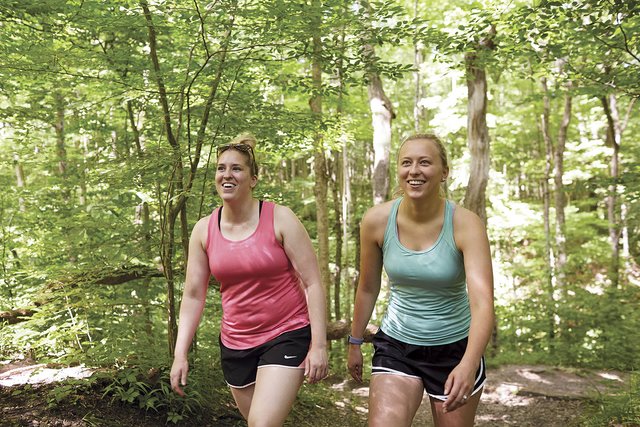
Whether you are on the hiking trail, taking an easy stroll, or searching for something to really get your blood pumping – you can find it along our trails in Miami County.
Lace-up your hiking boots, grab your gear and get ready to check out these local trails.
Charleston Falls Preserve
As one of the most visited parks in Miami County, the Charleston Falls Preserve has more than 216 acres of prairie and forests. It’s an ideal place to hike, take in the sights, and enjoy all that nature has to offer. The park offers a variety of hiking inclines, perfect for all skill levels.
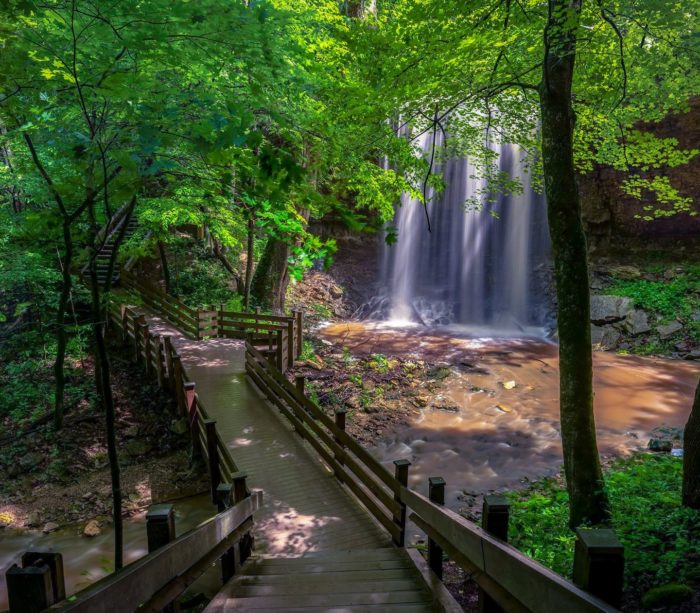
One of the most beautiful sights along this trail in Miami County is the “Miniature Niagara”, sharing the same rock strata as its namesake, Niagara Falls. From a small underground spring, the waterfall scales about 37 feet tall, then continues down to the Great Miami River.
Other areas to explore include the Thorny Badlands and Redbud Valley filled with beautiful colors and views of nature.
If you enjoy spotting unique wildlife, you’ll appreciate the opportunities that the Charleston Falls Preserve provides.

Great Miami River Recreational Trail
If you’re looking for a full-day, long trail experience, the Great Miami River Recreational Trail has 32 miles of paved trail for biking, running, and walking.
The Great Miami River Recreational Trail is part of the Great Miami Riverway, which is considered to be the nation’s largest paved trail network at 99 miles in length. This trail network connects communities up and down the river – and in the surrounding area – to facilitate connections between local events and attractions.
This trail takes explorers over small bridges, underneath state highways, along the river, and passes by a gorgeous golf course.
Check out a trail map, and plan your adventure!

Garbry Big Woods Reserve
For a beautiful little hike through a rustic area, you can enjoy the 2.2 miles of trails in the Garbry Big Woods Reserve in Piqua. It’s ideal for those who crave adventure but may have little ones in tow.
Even as a shorter trail, Garbry Big Woods still has a lot to offer. Take the family and explore more than 170 acres of land. It’s a great place to gather with friends and family, archery, fishing, and hiking. The mowed areas around the picnic shelters are great for taking a break for lunch. The shelters can also be reserved for parties and group gatherings.
The educational arboretum offers the opportunity to learn about Ohio’s native trees, as you learn to identify them by bud, leaf, or bark.
With their newfound knowledge, take the kids on a science adventure and see how many types of trees they can identify on their own. They will never know it was educational!
An interesting fact: the restroom facility is one of the first of its kind in Ohio to utilize the natural wetlands as a sanitary filtration system.

Hobart Urban Nature Preserve
If you’re looking for a hiking trail that allows you to explore the intersection of nature and art, try out the Hobart Urban Nature Preserve in Troy.
The trail on this preserve features a variety of welded sculptures, placed in specific habitats to illuminate the connection between nature and art.
The two miles on this trail make for an easy hike, but you’ll experience beautiful water views, plenty of flowers in the warmer weather, and various types of birds to spot along the way.

John A. Wannemacher Nature Reserve
You can take a hike through reclaimed agricultural land in this nature reserve in Troy, which features nearly two miles of trails and more than 100 acres of land.
If you are interested in viewing a variety of birds, be sure to bring your binoculars!
When you hike through this land, know that you’re walking through an area that has had a positive effect on local water quality as it reduces storm runoff, which helps to maintain water purity.

Maple Ridge Reserve
In Covington, you’ll find the Maple Ridge Reserve, which is located along the unique natural features of the Stillwater River.
This trail features 2.5 miles of peaceful, easy hiking through terrain that includes a sugar maple grove and a sugar camp. The large collection of mature maple trees provides sap for the on-site, educational maple sugaring operation.
The trees on this reserve provide an opportunity to view gorgeous foliage as the seasons change from the delicate leaves of spring to the bold colors of late autumn.
Enjoy a refreshing walk through the woods, watch wildlife, or fish in one of three ponds located in the park.

Stillwater Prairie Reserve
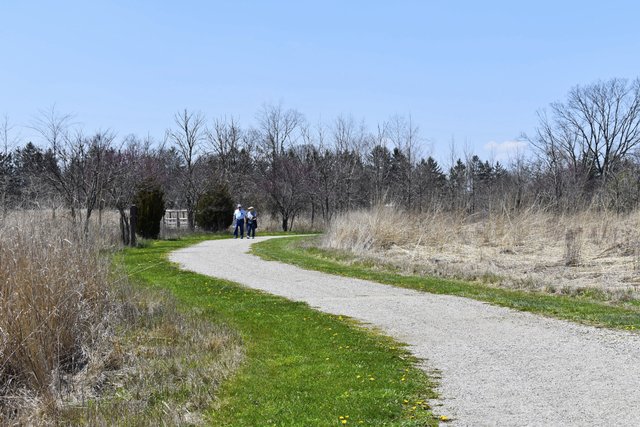
The Stillwater Prairie Reserve features approximately three miles of trail in a circular loop that winds around a variety of habitats. It is a great place to enjoy hiking – and even cross-country skiing.
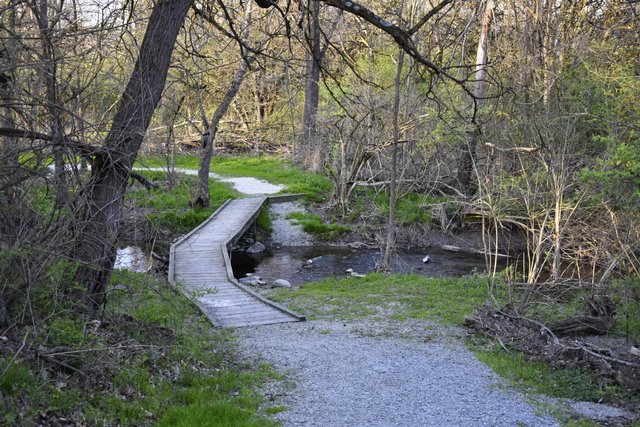
Enjoy the local sights of marshy habitats, shrublands, fields, and woodlands. The area features a boardwalk, rowboats to explore the man-made ponds, and picnic areas to relax and refuel.
The Stillwater Prairie Reserve is the perfect destination for a day-hike along with a group of family or friends, or possibly solo for some quiet contemplation.
Miami County is proud of the gorgeous natural scenery that highlights the beauty and serenity of our area. Try out each hiking trail throughout the year, enjoying the distinct seasonal changes that bring a variety of sights to behold.

After your adventures, stop by a local brewery or restaurant to end the adventure! Contact the Miami County Visitors and Convention Bureau for more information about our area.
Few musicals have humor, heart, and happiness wrapped in music that is catchy and memorable….one of those is David Yazbek and Terrence McNally’s ‘Full Monty!’ With a lot of love in tow, the show is filled with surprises and uplifting human resilience. TheatreLab Dayton‘s version is quite timely. The story is of six unemployed steelworkers in New York, facing economic troubles, who decide to give stripping a try…for the money! Along the way, these men and their loved ones must face their inner demons and social norms. Through their journey, and heading to the ‘Full Monty‘ (Yes, the men come through with their ‘tease’ to bring the title to life,) the men learn much about themselves and the real definition of what it means to be a ‘man!’
TheatreLab has brought some strong talent to the stage for this version. The 6 men are so well suited for their roles. Zach King plays Jerry with full heart and strong vocals, as a man doing his best; Dustin Evans’ take on Dave is real and relatable; Aaron Hill, as the sweet mama’s boy Malcolm, is perfectly cast; John Woll‘s deep voice and solid persona fit well with his portrayal of Harold; Joshua Hughes, a TheatreLab staple, once again lights up the stage with his comedic timing; and Tim Wilson‘s smooth, assured ‘Horse’ provides the quintessential ‘Big Black Man.’ 
The show is taking place at the Dayton Convention Center, which has gone through some renovations. The stage is perfect for the factory feel, and the orchestra fits nicely to bring the score to life. The show is Directed by Philip Drennen and the Stage Manager is Jennifer Barnaba. There are definitely some stand-out performances and numbers provided by the ladies in the show. Katie Pees brings a ton of energy to ‘Life with Harold,’ and the women don’t hold back on ‘Women’s World.’
Probably the moment that will provide the sweetest of reactions will be Aaron Hill‘s heart-tugging ‘You Walk with Me’….kleenex worthy! Josh Stucky, once again playing a woman, adds levity to the tale with ‘Jeanette’s ShowBiz Number.‘ And of course, the boys bring it home with the giddy ending ‘Let it Go!’
The show is FUN. It really is….and we all need joy about now. Leave politics, angst, and ugliness at the door. Join the boys in Buffalo as they bear all….both physically and emotionally!
The show is April 18 – 19, 2025.
For tickets…go to
Downtown Dayton was supposed to be buzzing with promise and progress on the afternoon of March 20th, but instead, the Small Business Social at The Contemporary Dayton revealed deep divisions between city planners and the very community they hoped to serve.
In a venue usually celebrated for its art and culture, the event—organized by the Downtown Dayton Partnership—was intended to showcase how the upcoming NATO Assembly might bring opportunities for downtown businesses. But as the night unfolded, small business owners voiced their mounting frustration. The galleries, typically filled with creative energy, became an impromptu forum for grievances about decisions that could jeopardize local livelihoods.
The afternoon opened on an upbeat note. Gallery host and curator Heather Jones welcomed the crowd, highlighting current exhibitions and a raffle that momentarily lifted spirits. Yet that optimism quickly faded as Syron Townsend, Community Partnership Manager for the Downtown Dayton Partnership, thanked small business owners for their ongoing support before turning the stage over to Jason Galanes.
Galanes, Chief of Staff for Republican Congressman Mike Turner and one of the lead planners of the NATO Assembly, delivered a message that many found dissonant. “The opportunity for downtown businesses to welcome delegates and constituents to patronize shops and restaurants,” he declared. But he soon undercut his own message with a remark that struck a sour chord: “The event begins on Memorial Day weekend, many people already out on vacation…” The suggestion that local businesses might simply “take advantage” of a national holiday to close shop was met with audible grumbles—a reaction that underscored the economic pressures these businesses are already facing.
Adding insult to injury, Galanes extolled the virtues of lasting public art and beautification efforts—projects funded by state and local tax dollars. Yet he offered little reassurance that these improvements would compensate for the financial strain that a week-long shutdown could impose on struggling downtown shops and restaurants.

The tone grew even more contentious when Major Christopher Malson of the Dayton Police Department took the floor. Tasked with explaining the design and purpose of the NATO Village Secure Zone, Malson’s presentation was a mix of policy details and offhand humor that did little to assuage the concerns of those present. “When the City Manager met with me over a year ago, she gave me the edict of ‘We will not be shutting down businesses…’” he recalled—yet the absence of City Manager Shelley Dickstein was conspicuous by itself.
Malson outlined a security plan that included designated entrances, foot-traffic only policies, and even a “Designated Protest Area” for what he insisted would be “peaceful” and “lawful” demonstrations. However, his warning that any protests outside that area might be branded as “riots” did not sit well with business owners who already feel marginalized in the planning process.
Questions about the logistical impact of the NATO event, particularly regarding parking, further fueled the discontent. One business owner’s query about whether the city would subsidize monthly parking costs for employees—an essential lifeline for local commerce—was summarily dismissed by Major Malson with a curt, “The city will not be providing any financial assistance to private businesses.” The response was met with growing frustration, as many pointed out that the downtown community was being expected to shoulder the burdens of an event from which they would reap little benefit.
A moment of further disruption came when an unannounced voice from the back of the room, later identified as Kristina Scott, Vice President of Strategy for The Downtown Dayton Partnership, abruptly attempted to cut off the ongoing questions. “I think this is enough, I believe we have what we need to bring this back to the broader group,” she interjected, prompting a bewildered business owner to ask, “Who are you?”—a question that underscored the disconnect between event organizers and the community they were meant to support.
By the end of the evening, many small business owners left The Contemporary Dayton not with a sense of possibility, but with more questions and a deep-seated mistrust of the process. The event, meant to highlight opportunities for downtown Dayton, instead exposed a glaring imbalance: local tax dollars were being spent to host an event that many feared would inflict financial harm on the very businesses that form the backbone of the city.
In an economic climate where every dollar counts, the promise of future benefits from beautification projects and enhanced public spaces feels hollow to a community that sees itself as an afterthought. As downtown Dayton prepares for the NATO Assembly, one thing is clear—without genuine support and transparent dialogue, the promise of a thriving, inclusive business community may remain just that: a promise unfulfilled.
If you are a small business owner who needs your voice heard regarding NATO, reach out to DowntownDayton.com and we will include your story in our next NATO Assembly update.


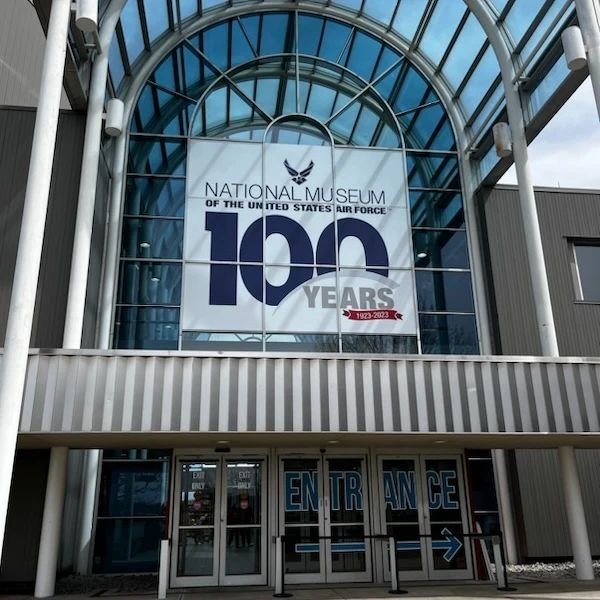
From the depths of the oceans to the outer limits of space, innovators and explorers continue to uncover mysteries and possibilities while adapting to the challenges of these unique environments. Visitors can explore both worlds and learn about those who dare to discover and dream — only at the National Museum of the U.S. Air Force!
A $12 ticket fee applies for this exhibition. Ticket fee grants entry into both OceanXperience and Drop in the Ocean, an interactive, social virtual-reality experience from Pulseworks. Fee helps cover the cost of bringing these cutting-edge exhibitions to the Museum.
Education groups that pre-register with the Foundation will receive free admission to OceanXperience. Education groups can pre-register by emailing [email protected] or contacting the Foundation by phone at 937-751-1580.

Stepping onto an interactive replica of OceanXplorer, the world’s most advanced research and filmmaking vessel, you
can choose a mission that sparks your curiosity. As you explore the ship and actively participate in hands-on STEM-based
research tasks, your journey is tracked and enhanced with RFID technology. The adventure culminates in an interactive
facilitated HoloLab experience and powerful cinematic scenes in the immersive area. The exhibition is designed to fully
engage all your senses with immersive soundscapes, tactile experiences, and visually dynamic media.

1100 Spaatz Street
Gate 28B, enter on Springfield St.
Wright-Patterson AFB
Dayton, Ohio 45433
(937) 255-3286
As the clocks chime midnight on December 31 and a brand new year is ushered in, the familiar soundtrack of fireworks, people cheering, and champagne corks popping will echo across the globe. Many of us will instinctively look for a bottle or two of celebratory fizz when buying wine for a holiday party; in fact, it’s been estimated that a quarter of all champagne bottles sold in America are bought between Christmas and New Year’s, with more than 360 million glasses of champagne and sparkling wine enjoyed in the U.S. each and every New Year’s Eve.

But, why do we choose this particular drink to mark one of the biggest dates in the calendar? While drinking champagne has a long and lavish history dating back centuries, it hasn’t always been an option for the majority of people. The sparkling beverage was once associated solely with royal courts and European aristocracy since royalty and nobility were the only ones who once could afford it.
Things began to change after the French Revolution and the huge societal changes that period brought about; back then, champagne quickly gained traction as a desirable way to celebrate special occasions. And, over subsequent years, that signature pop of the cork before pouring the fizzy, lively liquid would become synonymous with one of the biggest communal celebrations of all: New Year’s Eve.
Things began to change in the 1800s

By 1800, the act of staying up until midnight to ring in the new year had become more popular, a tradition which European settlers had brought to America. People began to frequent taverns, as well as visiting others’ houses, for fun-filled midnight drinks, which included punch as well as champagne.
As secular rituals began to replace religious ones following the French Revolution, champagne became more widespread as part of a variety of celebrations. One use was to ‘christen’ a ship, for example, before its maiden voyage. Soon, champagne was about to see a sudden huge surge in popularity and availability as prices dropped and sales boomed from six million bottles in 1850 to a whopping 28 million by 1900 as producers began to market the drink for special occasions.

By the end of the 19th century, champagne was widespread at New Year’s Eve parties. While still associated with luxury, it was more affordable for the middle classes as an occasional treat — and what better way to welcome in a fresh start than with an overflowing glass of aspirational bubbles? Today, champagne is still seen as an occasional celebratory drink by most, with New Year’s Eve proving one of the most popular times to indulge. And with a range of cheaper alternatives these days, from cava to prosecco, there’s even more reason to pop a cork this New Year’s Eve. Cheers to that.
“The holidays are a wonderful time to socialize with family and friends, and you’d be surprised just how well wine can pair with cookies and dessert,” explains Anthony Bilwin, general manager and sommelier at von Stiehl Winery, Cidery, and Distillery in Algoma, Wisconsin.
:strip_icc():format(webp)/bhg-million-dollar-sugar-cookies-F0MaGTZHaMT85fait0-0mt-0b773a6a1cf14751973bd6c0a1a2203c.jpg)
Christmas cookie wine pairing: Chardonnay
Bust out that oak-aged Chardonnay. The wine’s subtle sweetness and buttery roundness will play nicely with the sugar, butter, and vanilla that take center stage in these classic Christmas cookies, Popescu says. Aging a wine in oak imparts a hint of vanilla flavor, which only makes this pairing even better.
Although you might think of Chardonnay more typically as a partner for pasta or seafood, the popular white wine will complement the simple, nostalgic flavors and tender texture of the sugar cookies, Kakalios and Bilwin agree. Sommeliers often suggest Chardonnay with nutty dishes, so if your sugar cookie recipe or its icing happens to be spiked with almond extract (like our Christmas Sugar Cookie Cutouts), you’ll unwrap an extra level of deliciousness.
:strip_icc():format(webp)/gingerbread-cutouts-R136347-f1d2389bc49e49a9b69f7995df13bc9c.jpg)
Christmas cookie wine pairing: Moscatel
With punchy flavors like molasses, ginger, cloves, and cinnamon, gingerbread isn’t shy. To make each bite of the powerful cookie really shine, enjoy your Gingerbread Cutout with a glass of wine made with Muscat grapes (which also happens to be one of our top Thanksgiving wine picks).
“Muscat-based wines often evoke a gentle, candied ginger flavor, making for a fun and complementary match for the spicy warmth of gingerbread,” Popescu says.
Moscatel is one of many types of Muscat wines. The dessert wine is floral, sweet, and tastes even more like butterscotch, figs, or raisins the longer it ages. Most Moscatels offer some orange essence, which is a delight with gingerbread’s spice.
:strip_icc():format(webp)/BHG-basic-thumbprint-cookies-hero-01_2HRDY0aPaa8AOU2Q9g8o7c-74c77ca54d3f4879a05adc5e5b5aca53.jpg)
Christmas cookie wine pairing: Sparkling Rosé
When it comes time to consider the best wine pairing for fruit jam/jelly-preserve-stuffed goodies like Linzer or Thumbprint Cookies, let the spread take the lead.
“With fresh red fruit notes, a young, semi-sweet sparkling rosé sets off the fruit preserves in thumbprint or Linzer cookies while adding a touch of brightness to each bite,” Popescu explains.
The effervescence of a semi-sweet, often labeled as “demi-sec,” sparkling rosé acts as a nice counterpart to cut through the richness of the buttery cookie dough base.
:strip_icc():format(webp)/BHG-recipe-chocolate-chip-cookies-hero-01-84bd634192b64b6d92076d3af528fa38.jpg)
Christmas cookie wine pairing: Cabernet Sauvignon
Although they’re just as appropriate for bake sales and summer potlucks as they are for the winter holidays, we can’t go through a Christmas season without at least one batch of CCCs.
Remember our dark with dark scheme? That’s the focus here, thanks to the bittersweet and bold dark chocolate chips that are the hero ingredient in every chocolate chip cookie recipe.
While other fruit-forward red wines would also work, Bilwin believes that “not much is better than a piece of dark chocolate and a glass of Cabernet Sauvignon by the fire, but this pairing comes close! Dark chocolate chips with the buttery flavor of the cookie help to highlight the fruit and nutty flavors in the Cabernet, adding a little vanilla undertone as well.”
:strip_icc():format(webp)/BHG-millionaire-short-bread-8711943-hero_4hWpjs73qGX93KUxVGDhoK-4ec4b6a221114eec8e0ac0e4c71ec7b6.jpg)
Christmas cookie wine pairing: Moscato d’Asti
Ted Lasso’s signature cookie recipe is a lesson in editing and execution. Flour, sugar, and a lot of shortening or butter are all that’s required to make the most traditional shortbread. From there, vanilla extract and salt often join the party. While buttery shortbread is a treat as-is, come holiday season, we like to spiff things up with bonus ingredients like almond butter, maraschino cherries, and dried cranberries.
Whatever shortbread variation you bake up, Kakalios is keen on another Muscat-based wine: Moscato d’Asti. This low-alcohol, sweet, and bubbly vino is an elegant pairing that won’t overpower shortbread’s delicate flavors.
Plus, “shortbread’s high fat content begs for a light and slightly effervescent sweet foil, with understated flavors that permit the subtle tones of the cookie to shine,” Kakalios says.
:strip_icc():format(webp)/easy-gluten-free-peanut-butter-cookies-RU311219-c44589ddba274567b130c8e20a8c9119.jpg)
Christmas cookie wine pairing: Merlot
Peanut butter and jelly is another dynamic and delicious duo that’s gratifying for kids and adults alike, and a similar approach is what we’re taking here: peanut butter and fruit.
For classic criss-cross-topped Peanut Butter Cookies or Kiss-crowned Peanut Butter Blossoms, Bilwin says your best bet is a popular red wine: Merlot. A full-bodied red with silky tannins “will pair perfectly with chocolate and help wash down the peanut butter,” according to Marcy. And with notes of plum, cherry, and chocolate, “Merlot offers incredible fruity qualities, reminiscent of peanut butter and jelly with chocolate,” Bilwin says.
:strip_icc():format(webp)/R173104-b7b4173af9cc419db8957d52f6495630.jpg)
Christmas cookie wine pairing: Tempranillo
There’s nothing bashful about Triple-Chocolate Truffles, Peanut Butter Truffles, and Buckeyes. (In case you are unfamiliar, the latter is Ohio’s signature chocolate candy recipe that’s essentially a ball of peanut butter fudge partially dipped in melted chocolate.)
So once again, you’re going to want to go dark and open up a bottle of Tempranillo, a medium- to full-bodied red wine from Spain.
“The deep, dark fruit flavors of a Tempranillo, combined with its easy-drinking character make it a perfect match for the intensity of chocolate truffles or Buckeyes,” Popescu says. (Lucky enough to have extra? Transform it into a Tinto de Verano to enjoy later in the evening or week!)
:strip_icc():format(webp)/R109611-83e58eb24cf44997bedeaaebce0c3cdb.jpg)
Christmas cookie wine pairing: Sauternes
They look like snowballs and taste like a tropical vacation, so Coconut Macaroons are always a welcome addition to our dessert boards come holiday season.
That being said, the forceful coconut essence can make for a challenging pairing. Popescu says the fix can be found in the dessert wine section.
“French Sauternes, a Bordeaux dessert wine known for its lush tropical fruit and warm baking spice notes beautifully accompanies the sweetness and texture of Coconut Macaroons,” Popescu says.
:strip_icc():format(webp)/fabulous-five-minute-fudge-R075797-e2a2a43277a243b3bd2962de26be32e9.jpg)
Christmas cookie wine pairing: Port
As one of the sweetest, most dense, and richest Christmas candies, Fudge asks for a wine with a similar luxurious build. Enter: Port, a Portuguese fortified dessert wine.
Popescu, Marcy, and Kakalios agree that Port is the perfect match, since the drink’s “layered sweetness harmonizes with the rich, intense flavor of fudge, creating an indulgent experience,” Popescu tells us.
Where other wines might get lost, Port’s fairly high alcohol content (18 to 21%), silky texture, and innate sweetness, mean that it can stand up to the boldness of the fudge. Try a Tawny Port, renowned for its nutty flavors, or a Vintage Ruby Port, with chocolate, warm baking spice, and dark berry notes.
:strip_icc():format(webp)/candy-cane-bark-R091992-6280a572ffe74f95832d73f19fb4332b.jpg)
Christmas cookie wine pairing: Shiraz
The notion of combining chocolate and mint is controversial as it is. Now when you try to pair both of those—found in Christmas candies like Candy Cane Bark—with a drink, the plot thickens.
Luckily, Marcy and Popescu have our backs with their divine drink pairing: Shiraz, an Australian or South African red wine made from Syrah grapes.
“With its ripe blackberry, mocha, and subtle smoky notes, Shiraz pairs well with Peppermint Bark, balancing the coolness of peppermint with robust fruit and spice,” Popescu explains.
Meet the experts:
|
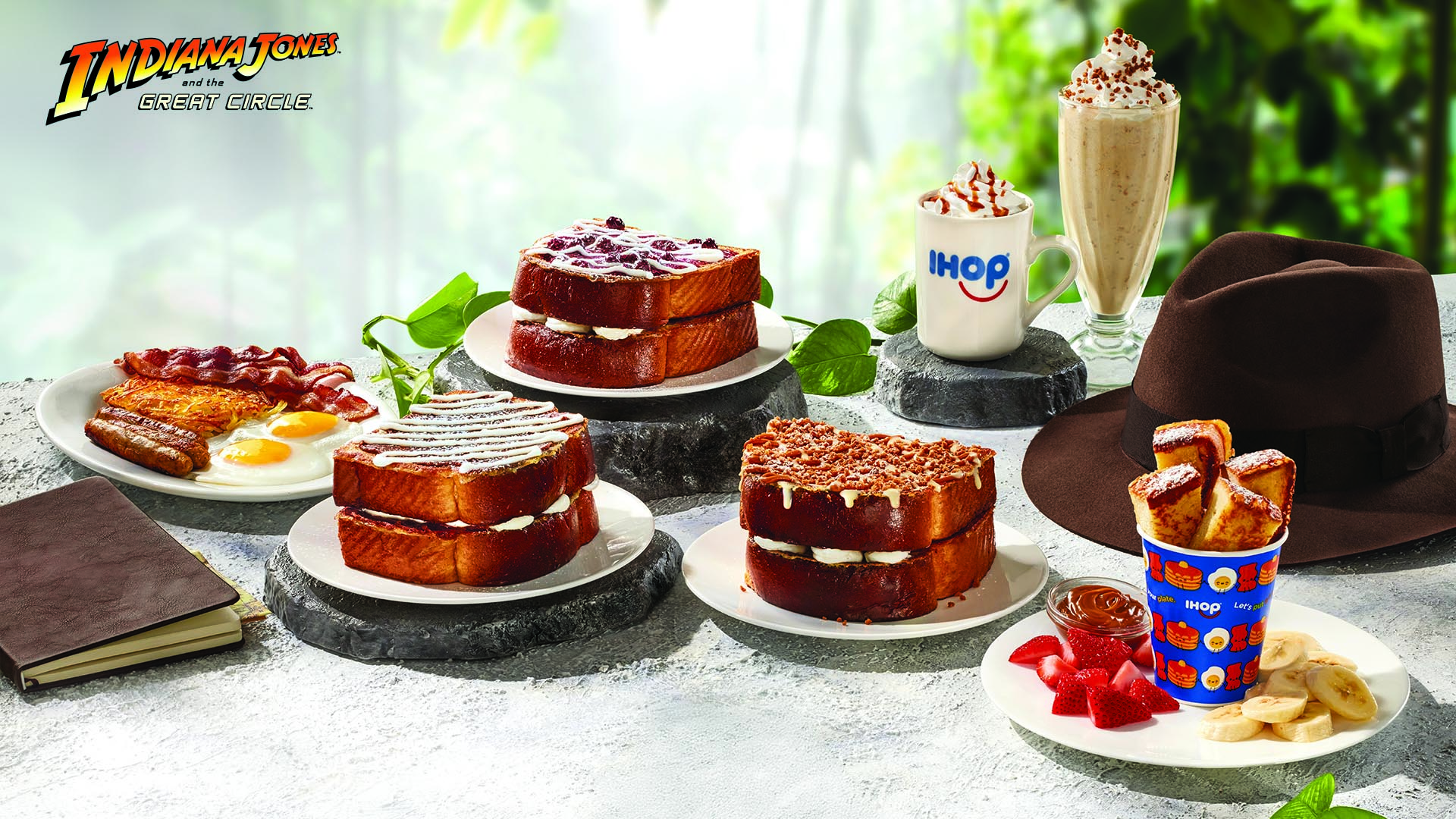
Ready for an epic breakfast adventure? As Xbox gears up for the highly anticipated release of Indiana Jones and the Great Circle on December 9, we’re teaming up with IHOP to serve up a breakfast spread fit for a legendary adventurer.
Starting November 18, IHOP guests can dive into a special Indiana Jones and the Great Circle-inspired menu featuring the debut of Fully Loaded French Toast and signature beverages including ‘Explorer’s Caramel Apple Butter Hot Chocolate’ and ‘Long-Lost Cookie Butter Milkshake’.

But the adventure doesn’t stop there—become an International Bank of Pancakes member and upload your IHOP receipt to earn PanCoins that you can redeem for exclusive Xbox-themed prizes in the IHOP Stack Market.
The Stack Market will have weekly drops throughout the program, including full game downloads, exclusive merch, gaming accessories, one month of Game Pass Ultimate (new members only), and much more. Make sure to tune in as IHOP and Xbox host a livestream on November 18 at 12:30pm PT on the Xbox Twitch and Xbox YouTube channels to unveil some of the exclusive rewards available only to IHOP loyalty members.

As the official breakfast partner of Xbox, exclusive merchandise was created for the IHOP Stack Market; most notably, a set of limited-edition collectible glasses nodding back to ’80s nostalgia. The glasses feature original artwork by Matt Taylor from Xbox and spotlight iconic Xbox titles like Indiana Jones and the Great Circle, Halo Infinite, Sea of Thieves and Microsoft Flight Simulator 2024, alongside a limited-edition IHOP gift card series sporting similar designs from those same titles.

Over the coming months, IHOP will host Xbox-themed sweepstakes in the Stack Market, including custom IHOP-themed Xbox Series X and more, offering even more ways to celebrate the partnership. Head to IHOP, enjoy some legendary eats, and score exclusive prizes.

You can check out more about fall colors in the MetroParks at their website.
These are just a few of the many places around the Dayton area to see spectacular fall foliage. This Dayton.com Fall Hiking Guide includes additional information about fall foliage. If you’re traveling outside the local area, this Ohio.org blog post highlights suggestions from around the state.
Spot some truly beautiful fall colors? Snap a pic, share it on social media, and tag us (@destinationdayton on Facebook & Instagram) – we might share your photo on our accounts!
Preservation Dayton, Inc. (PDI) accepts nominations for outstanding individuals businesses, or organizations that have contributed to PDI’s mission to promote, protect, and enhance greater Dayton’s architectural heritage, its setting, and its contributions to the region’s quality of life.
These awards recognize and celebrate historic preservation leaders in the following categories:
Criteria: Each award recognizes creative, inspirational leaders whose efforts have contributed to the protection, renovation, and revitalization of historic neighborhoods, individual structures, or strengthened the historic preservation movement or the quality of life in Dayton’s historic communities. Awards may celebrate neighborhood and community leaders, business owners and businesses, nonprofit organizations, government leaders, journalists and other dedicated individuals who have succeeded in protecting Dayton’s historic architecture and built environment.
![]() |
|||||
|
This nominee, over the past year, has saved a home at 1000 W. Grand. He has completely rebuilt a collapsing wrap-around porch and is now engaged in a full restoration of the interior of that property. His work and attention to detail has been exemplary and we consider him a true asset to our Dayton View Historic District.
Additionally, Mr. and Mrs. Rashaed have completed the restoration of a double home at 624-626 Superior Avenue Both the interior and the exterior have been completely restored, true to its period architecture and decorated in a more contemporary style making a striking design style. They currently use it for short term rentals.
Both properties are viewed by our District residents and our Neighborhood Association Board as assets that were recovered from the brink of loss and put back into productive use for the community. Earlier this summer, each of these properties were featured in the Dayton View 2024 Historic Home Tour and were well received by all of the tourists.
![]() |
||||
|
The Five Oaks Historic Districts is pleased to nominate the Our Lady of Grace Parish for their diligent work to maintain the historic Corpus Christi Catholic Church. Particularly, we celebrate the 2023 exterior renovations, and although the original tile roof could not be saved, the pressed metal replacement is a fitting replica that retains the historic aesthetic.
Designed by architect William Russ, and built in 1911, the Corpus Christi Church was described at its dedication as projecting “an Old World picture” that “when the sun shines on the red tiled roof and white stucco walls … is as pleasing as it is rare (Dayton Herald). All the distinctive features remain today and include arched casement windows with art glass inserts, painted stucco with gold and blue scrollwork accents, and red tile(like) roof.
For over 110 years, this church, and its impressive Mission style and red roof, has stood at the corner of Forest and Homewood Aves, and because of the parish’s continued care, it has been a constant centerpiece of the Five Oaks neighborhood.
![]() |
||
|
After driving by the corner of Huffman and 5th street almost everyday for nearly ten years, Kathleen Tandy was beyond excited when she started to see some changes being made to the commercial buildings that had been long neglected. As the time grew near for her to find a permanent location for her new business, Pink Moon Goods, she started to ask herself if this was the future home of her little shop. It only took stopping one time and peeping through the windows and then driving around the Huffman Neighborhood to convince her that Huffman was the place to be.
As much of the renovation happened before Kathleen settled into the new space she was excited to make it her own and to help add some vibrancy to this corner. One of the first things she noticed was a triangle concrete block right inside the front door. Having been in many historic buildings throughout her life she had a hunch that at one time there was a tile entryway and she was excited to add a little historic touch to the beautifully restored building. Working with the owners to create a design that reflected their Greek heritage she set out to create a lovely simple piece using small one inch tiles.
Being an avid gardener Kathleen was also excited to create some excitement at the corner by adding a garden on the park strip right at the corner. It’s a small but mighty garden where Kathleen is excited to change up a little each year. It features native plants and annual flowers as well as food. Last year there were butternut squash and this year she tried her hand at growing corn!
Being in this neighborhood is important to Kathleen as she sees her business as being pivotal to the overall transformation of the neighborhood and Dayton as whole. Interacting with the folks who live in Huffman continues to remind her each day of how impactful the presence of her business has been in stabilizing the area. Some of her favorite moments in the shop are when folks run in real quick to get laundry detergent, when a neighbor walks over barefoot for a card before they set out to a wedding, or when a kid comes in to play at the kitchen or spend their allowance on some stationery for their penpal.
![]() |
||
|
During the over thirty years that he lived in McPherson Town (beginning in 1990), Bob Ruzinsky was instrumental in protecting, renovating, and revitalizing this historic neighborhood. He was directly responsible for renovating six homes (28 McDaniels, 21, 26, 27, 30, 225 McPherson). He was a member of the Neighborhood Development Corporation for many years, including at least 15 years as president. During that time, his leadership was instrumental in the renovation of 225 Riverview and the effort to build four “infill” houses (120 Floral, 120 Babbitt, 201 McPherson, 115 McDaniel). Bob represented NDC in the joint venture that renovated the Hawthorne School into apartments in 1997. He was also involved in acquiring the land that is now the McPherson Town Neighborhood Park, and the early improvements that made it a park. These things would not have been accomplished without Bob’s investment, leadership, and dedication.
An essential character of our neighborhood was defined when the access from Main Street was closed. Bob was instrumental in the installation of the protective barriers that stop automobile traffic, but not pedestrians, at the ends of McPherson and Babbitt streets. These barriers are planters and trees, which enhance the “leafy” character of our streets.
Bob was an early force in developing our biennial Holiday Home Tours, which began in 1993. He helped establish the format of guided tours to about 10 homes in the neighborhood, including a stop for refreshments. Much of the process and planning that we follow every other year were developed by Bob. This event showcases the best aspects of historic neighborhoods for our visitors, displaying the way that renovation can preserve historic character and also blend in updates that make these homes eminently livable. A later innovation instituted by Bob, and an example of his creativity, was to include a house that was in the process of renovation. The incomplete portions of the house reveal the way that structural and design considerations must be resolved together. This event does even more for us residents by pulling the neighborhood together in a large effort shared by nearly everyone.
![]() |
|
|
If it weren’t for creative visionaries and dedicated community-builders like Tim and Sharon Patterson, the area known as Burns-Jackson would have never become the Oregon Historic District—the thriving historic neighborhood that sparked the historic preservation movement in Dayton.
In 1973, the Patterson’s purchased the Eastlake mansion built by John H. Balsley, the inventor of the step ladder, and began a forty-year journey of inspiring many of their friends, neighbors, and city leaders to transform the blighted area near East Fifth and Wayne Avenue that many dubbed “Filth and Wine.”
The Pattersons lovingly restored the Balsley Mansion as their family home, retaining its remarkable millwork, hardwood floors, marble mantels, ornate windows, and 14-foot ceilings that are still marked with height of 1913 flood waters. In the meantime, Tim shared his remarkable carpentry and renovation talents by working on almost every house in the district. It’s easier for Tim to walk through the neighborhood to point out the few houses he did not work on rather than many that benefited from his passion for historic preservation and quality craftsmanship.
The Pattersons were also instrumental in saving the 1888 Romanesque Revival church that had stood vacant for nearly 15 years at the corner of Cass and Clay streets. When many thought the church was beyond saving, the Pattersons were stewards of this irreplaceable neighborhood landmark. Tim then helped Karl Williams gain support and navigate City Hall to turn the church into a world-class rock-climbing center, The Urban Krag, which opened in 1996 and is celebrating its 28 th year in business.
The Pattersons then undertook the renovation of the Central Baptist Church into four breathtaking, market-rate condominiums—including one as their residence. The Romanesque Revival church was built between 1888 and 1882 is one of the finest examples of a historic church reuse in the nation and is an inspiration for saving the many Dayton churches that are facing closure and vacancy.
Along the way, the Pattersons opened two successful businesses on East Fifth Street, the Nite Owl Coffee Shop (which served the best peanut butter milkshakes on the planet), now the location of Blind Bob’s; and the 5 th Street Gallery gift shop, now the location of the Culture restaurant and doing business as Zig Zag in Centerville. But even more remarkable than their commitment to historic preservation are the Pattersons’ generous commitment to creating a caring and fun community in the Oregon District. They have opened their home for countless holiday and autumn home tours, hosted neighborhood New Year’s Eve parties, housed visiting artists and students, pulled up asphalt to expose historic brick streets, volunteered for neighborhood clean- ups and improving Newcom Park, worked on the historic street light maintenance team, served on the Oregon Historic District Society board, and been generous and kind friends to all who have lived in the Oregon District.
![]() |
|
|
Marjorie Harrell transformed a group of vacant homes, connected by a past owner into a homeless shelter, into seven stunning apartments in Historic South Park. This labor of love came from the desire to upgrade the community and tackle a project that was daunting and complicated in a way that kept others from taking it on.
The former Daybreak runaway shelter was transfigured in a dormitory, institution style that was so far from the original historic single-family homes that no other use could be imagined by other investors. Marjorie and her partner Hans Wollenberg bravely moved forward with the goal of making something out of the property that their neighbors would be proud of with the assistance of architect Matt Sauer, a former South Park resident himself. The result, Slidertown Apartments (815-819 Wayne Ave.), opened to new residents this year for the first time after being vacant since 2015. The 8,500 square foot property was originally built in the 1920’s as two separate single-family homes.
The apartments range from 650-1,300 square feet with unique layouts and beautiful finishes, with historic elements and large windows complimenting modern conveniences. The transformation took several years and, sadly, Hans passed away before its completion. The exterior of the property has been restored and is a bright spot along Wayne Avenue.
Marjorie, who moved into South Park in 2018, continues to take on difficult neighborhood projects and has multiple other vacant distressed properties in various stages of renovations. She is returning a duplex to its original single-family status on Perrine St. and has renovated a former bookstore into an artist studio space for the Mosaic Institute. Marjorie stepped forward and acquired a significant neighborhood eyesore and problem on Alberta St. and has secured the property for future renovations, much to the gratitude of the neighborhood.
The restoration and improvement of Historic South Park property is the most visual of Marjorie’s contribution to the fabric of the neighborhood. Her desire to help others behind the scenes has had an equal impact. She is the first to help neighbors in need, offering help with animals, yardwork, transportation, and responding to any cry for help. Marjorie’s preservation work by bringing vacant properties back to productive use has indeed made South Park proud and grateful to call her neighbor.
![]() |
|||||
|
In May of 2008, Joe Dierkers received a call from a neighbor, Brian Young. Joe and his wife, Barb, had just bought a house in St. Anne’s Hill. They had not met, but Brian had heard that Joe was a real estate broker. He told Joe of his idea to purchase a run-down, grungy old bar on E. 5th Street, in the middle of the neighborhood. The building had been a bar since the 1930s, originally known as Jo-Jo’s but since renamed as The American Saloon. Brian’s idea was to operate it as a neighborhood gathering spot and, in the process, improve what was a major eyesore. He asked for my help to get this project off the ground. That began a 4-year project that is now the 5th St. Brew-Pub. Their research started with a visit to the American Saloon to have a beer. It was dark, dirty, smelly and almost devoid of customers. They contacted the owner who offered to sell for $85,000. What he didn’t tell them was the property was in default on its land contract and behind in taxes. They then contacted the actual owner of the building in Tennessee, who offered to sell the buildings for $15,000. They wouldn’t get the liquor license, but it was loaded with unpaid fees, so they didn’t want it anyway. Next, Brain and Joe visited several other neighborhood bars (ordering beers at each place was, of course, a research necessity) and found that many were viable businesses. In 2008, the economic climate was cloudy, but after talking to neighbors and friends, they were able to raise over $50,000 by forming an LLC and selling shares. The pair negotiated the purchase, and soon after taking ownership on October 10th, 2010, began the rehab process. At this point, they had a company, they had shareholders, and a building, but they still had no idea of how to move forward. The primary issue was with the deteriorated conditions of the two-building property they just bought. The main building is a 2-story commercial structure built in 1856 as a grocery store and living quarters for the grocer’s family. The outside stairway to that apartment was rotted and missing several steps. The bar room windows had been covered and the ceiling dropped making the inside dark and dingy, and potentially adding to the musty and unpleasant smell. The wood bar (circa 1933) was the only fixture of value. The mechanical systems were old and of questionable serviceability. The roof leaked, and the whole building was ugly. It had been spray painted with an industrial gray color, or anyway, that’s what could be told from what little paint remained. The 900 SF house next door, which had been the manager’s home was in even worse condition. Several people suggested that it be demolished, which was not a bad idea. Daunting as it seemed, the neighborhood got behind the project, not only financially, but with sweat equity. The demolition day had about 30 people getting really dirty, but the interior was opened up. A new roof and new windows were installed, and the exterior was painted “Deeds Barn Green”. Even with all these renovations, the duo was struggling with what to do next. That was when Brian received a call from a friend who was passing through Austin, Texas. He stopped at a bar that had recently opened under “Co-Op” ownership. It was the first such enterprise in the US. Brian flew to Austin over Memorial Day weekend, and talked to the board members. He flew back with a plan already in his head. Brain and Joe quickly formed an LLC and offered shares at $100 each to anyone who would listen in order to judge the viability of the idea. In three weeks, we had 850 members, $85,000 new investment capital, and more enthusiasm than could be measured. The Fifth Street Brew Pub was opened later that year as the first Co-Op Brew Pub in Ohio. The Brew Pub is now in its second decade, and two historic structures that could easily have been demolished have been renovated and maintained, serving as a real focal point for the commercial corridor of E. 5th Street. Brew Pub membership is now over 3,500. It survived Covid and the explosive growth in the number of competitive brew pubs since 2012. Another benefit accruing to St. Anne’s Hill is that in 2010 there were eight vacant commercial buildings on our two blocks of E. 5th, and now there is only one. A co-op brew pub was not the initial idea, but it’s become so much more. It would not have happened without the vision and motivational skills of Brain Young and Joe Dierkers.
![]() |
|||
|
Carli and Hamilton Dixon purchased three abandoned commercial buildings (811, 817, and 905 E. Third St.) in 2009 and began years of work breathing life back into the buildings. The 18,000 square foot building, now housing the Brightside, was filled with abandoned clothes, trash, and debris. The couple cleaned out the building, restored all its services, and renovated in into what has become a beautiful, sought-after event venue and home to live music and entertainment. The once-abandoned coal depot, homeless shelter, and more now boasts a ballroom, a sunny loft space, a bar, and a beautiful patio and grounds.
The Dixons never intended to own a music and event venue, but it suits them well. Their mission is to bring people together to celebrate love, enjoy art, and build stronger community bonds…and have a good time while doing it!
When they first acquired the property, they hoped to create the community in which we wanted to live. Both Dixon’s have been business owners Downtown for decades. Carli is the co-owner of Bloombeads by freezeframe (bloombeads.com), a local company that has specialized in preserving meaningful flowers as jewelry and art since 1996. Hamilton is a local metal sculptor (hamiltondixon.com) whose work can be seen at the Dayton Art Institute, The University of Dayton, and Hospice of Dayton, along with many other public and private installations. Both businesses are housed in their compound of buildings on E. Third St.
The renovation and activation of the Dixon properties on E. Third St. has galvanized the clean-up and restoration of the many other properties along the street, making a once blighted empty corridor a destination for food, entertainment, weddings, and other events. The live music programming has filled a void in Dayton and has drawn fun and quality music to the City’s core.
The impact of the Dixon’s dream and its fruition is far-reaching and has contributed greatly to Downtown Dayton’s renaissance. The Dixon’s had the vision, courage, and creativity to lead the charge and make a personal and financial investment in Downtown before many others did.
![]() |
|||||
|
In 2017, Sandy Mendelson, the former owner of Mendelson’s Surplus, passionate promoter of downtown Dayton, and custodian of the historic Delco manufacturing buildings, told the Dayton Daily News that he brought Crawford Hoying from Columbus in 2014 to look at his buildings. Mendelson went on to tell the reporter, “I wanted to sell to someone who would do the right thing for Dayton, because Dayton has meant a lot to me…I just think Crawford Hoying is a group we can depend on. If they say it’s raining outside, put a raincoat on. They don’t play games…and Jason Woodard, he’s a shaker and a baker.”
Indeed, Crawford Hoying and Woodard Development have “shaked and baked” and done the right thing for Dayton. Beginning in 2013, the developers have transformed the area surrounding the Dayton Dragon’s Stadium into the vibrant Water Street District. Their monumental and high-quality investments include five new apartment communities, the Moeller Brew Barn, two new hotels, two additional restaurants, plus the massive eight-story building that is now The Delco, home to 160 new market-rate apartments.
Far exceeding the standards of many other real estate developers, the partners have combined sensitive, place-based new construction and historic preservation to create a truly unique work, play, and live environment in southwest Ohio. While many other midwestern cities have lost the architecture of their industrial past, Crawford Hoying and Woodard have preserved the unique history of Charles F. Kettering and Dayton’s legacy of manufacturing and technical innovation for generations to come.
The massive Delco manufacturing complex is actually larger than the Dayton Arcade and was especially daunting to other potential developers—but not Crawford Hoying and Woodard. Just clearing Mendelsons, which was packed with hundreds of thousands of items, possibly millions, was a major effort. The partners also carefully maintained the industrial character of both the Delco Lofts and The Delco apartments by matching the original large-scale industrial windows, retaining the concrete mushroom columns and floors, and preserving the high ceilings. Delco Lofts also retained “Boss Kettering”’s office space as a community room for residents. And many Dayton residents were especially thrilled when Crawford Hoying and Woodard preserved The Delco’s iconic black water tower, a symbol of Dayton’s history of innovation and the dynamic future that the partners have created for our city.
![]() |
|
|
Many preservationists talk about standing in front of the “bulldozer” to save a historic building, but very few have actually done it —unless you are Ben Sutherly, the President of the Troy Historic Preservation Alliance.
Stopping the bulldozers poised for an unlawful demolition at 4 a.m. were just a few of the many cliff-hangers that the Troy Historic Preservation Alliance (THPA) overcame in their four-year journey to save the IOOF Building/old Miami County Courthouse, an irreplaceable landmark in Troy’s historic downtown.
The remarkable Greek Revival Miami County Courthouse was built in 1840-41 and is one of the oldest standing courthouses in Ohio. In 1846, Ohio’s Black Laws required nearly 400 formerly enslaved people to register with the Clerk of Courts. These citizens, the Randolph Freedpeople from Virginia, were the largest single migration of African-Americans to a free state prior to the Civil War. In 1902, the Independent Order of Odd Fellows removed the Greek Revival façade and added a three-story brick Richardsonian Romanesque Revival building to the front. The new building became a historic anchor in a block of century-old storefronts.
The historic structure was snatched from the jaws of demolition multiple times beginning in 2020, when the owner refused to repair tornado damage to the façade. After nearly three years of legal appeals, contradictory structural assessments, and staving off demolition orders, the THPA took on the daunting challenge of buying the building – at full asking price, sight unseen. They pledged to raise $850,000 to stabilize the historic structure in just four short months from January to April 2024 or allow its demolition. Thanks to the THPA’s tenacity and leadership, the organization rallied adjacent property owners, many generous individuals, businesses, and nonprofits to meet the challenge.
As the new owner, the THPA is preparing the building for its next chapter. Displays to tell the story of the building’s remarkable history—including the Randolph Freedpeople, the era of the IOOF lodge, popular Troy restaurants and businesses through the 1980s, and the recent struggles and successes to save it. The THPA is also working on nominating the building to the National Register of Historic Places and protecting it with a conservation easement to ensure that the building is sold to an owner who will protect the building’s place in Ohio’s history for generations to come.
After a tornado hit Troy in January 2020, damaging more than a dozen commercial structures, the owner of the historic building refused to make repairs. The Troy Planning Commission and the Board of Zoning Appeals narrowly approved the demolition in October and November, 2021. With growing grassroots support, the Troy Historic Preservation Alliance (THPA) worked with adjacent property owners to appeal the City’s decision to the Miami County Common Pleas Court. The Court overturned the City’s demolition decision in October, 2022 and the Second District Court of Appeals upheld that decision in March 2023. The owner, under the cover of darkness, then attempted to demolish the building before Sutherly’s standoff and a court order stopped him. The THPA’s efforts spared the historic landmark from demolition—but only temporarily.
Several engineering assessments commissioned by neighboring property owners, the City of Troy, the owner, and Miami County varied in their conclusions about the building’s stability. In June 2023, Miami County Building officials asked the court to order the building demolished due to safety risks. The judge refused. The next day, the City closed West Main Street, Troy’s busiest thoroughfare. For eight months, the closed street caused difficult conditions for downtown businesses. In December 2023, through a court-mediated settlement, the THPA agreed to buy the building and settle all legal disputes with a commitment to stabilize the IOOF Building/old Miami County Courthouse by the end of April 2024, or the building would be demolished.
The result was a remarkably successful fundraising effort by the Troy Historic Preservation Alliance and numerous, generous supports who invested more than $950,000 into the building to stabilize it and restore its place as a key downtown asset.
This nomination was excerpted from:
–“The Last Courthouse War” by Ben Sutherly, Spring 2024, Revitalize Ohio, a Heritage Ohio Publication pp. 25-26
— The THPA’s presentation after purchasing the building https://www.thpatroy.org/support
— Read more about the THPA’s effort to save the IOOF Building/old Miami Court House and numerous articles in the Dayton Daily News which covered the unfolding story.
![]() |
|
|
A life-long Daytonian, urban designer & planner, community-builder, and historic preservationist, John Gower’s creativity, dedication, and perseverance inspires us all to make Dayton a better place to live.
Like his place-making soulmates and fellow “Dayton Walk of Fame” recipients, Jean Woodhull and Alice Woodward, John has never sought credit or recognition for his ideas, sweat equity, and devotion to our city.
John received his “Placemaking Engineering” degree at the University of Cincinnati’s School of Design, Architecture, Art, and Planning. As Dayton’s population moved to the suburbs, John and his classmate Jeff Wray drove back to Dayton throughout the week to board up abandoned houses in the Dayton View neighborhood where John grew up and still lives. With a background in architecture and planning, John devoted his career as Dayton’s Downtown Urban Design & Planner and the Director of Community Development and is now the Urban Design Director for CityWide Development Corporation.
In addition to his day job, John created and led the non-profit Living City Project, at Ludlow and East Fifth Street from 1988–1995. But the Living City Project was much more than a location. John’s vision ignited the future potential of downtown Dayton when few had hope for our declining city. Here’s just a few ways John’s creativity and resourcefulness and the Living City Project engaged our community to believe in a better future. Traveling side-walk cafes popped up when there was absolutely no outdoor dining in the city and “pop-ups” weren’t even a thing. Historic photographs appeared magically at their original locations to inspire a more livable, greener, and welcoming city, like Metroparks’ beautiful cascading water features inspired by the Miami-Erie Canal locks and the historic fountains and gardens that once lined Patterson Boulevard. “Talking Building Tours” made our architectural treasures come alive to tell us what they had to say about our past and our future And an inspiring speaker and movie series at the Neon and Dayton Art Institute (CityShape/City Scape 1986–1990) featured internationally recognized urbanists like William (Holly) Whyte, Jane Jacobs, and others to educate us on why place-making is essential to the heart beat of a city. Without a doubt, John’s Living City Project was a catalyst for the downtown Renaissance we are experiencing today.
But there’s more. Because of John’s vision and collaboration:
—two National Register historic facades were saved and integrated into the RTA center and now grace the corner of Third and Main
—the RTA also renovated the Romanesque church at West Third and Edwin C. Moses as the RTA Community Center
—the “Decoding Dayton” youtube series of more than 15 videos uncovers fascinating and beautiful historic buildings and areas of our city
—and Private Fair, the Civil War Union soldier’s statue, was moved from the north bank of the Miami River back to its original location at Main Street and Monument Avenue. John hopes the Civil War-era statue is a daily reminder of the healing and “fairness”; still needed in the greater Dayton community. The relocation of Private Fair back to Main Street triggered the Main Street streetscape overhaul of 1992/93, which resulted in the removal of two traffic lanes being replaced with streetscape.
And then there’s John undying faith and devotion to seeing the Arcade brought back to life. He, along with fellow PDI Life-time Achievement recipient, Dave Williams, worked diligently to attract viable developers and investors to revitalize this irreplaceable landmark. And again behind the scenes, Johnworked diligently and mostly single-handedly to clean gutters and stop the water damage in the massive nine-building complex—until Cross Street Partners, the Model Group, and McCormack Baron Salazar renovated and opened the landmark in 2019 after it was shuttered for 30 years.
John also led efforts to preserve Dayton’s historic residential neighborhoods and the architectural heritage of our city. John’s work as a city planner, under the direction of Paul Woodie, and as Director of Community Development, helped to create and support Dayton’s Historic District Zoning. Today, 13 locally designated historic districts and 70 local landmarks are protected from demolition without review and approval from the Landmarks Commission. And our city’s thriving historic districts have seen a 122 percent increase in property values compared to .07 percent in non-historic districts from 1996-2022.
As the Director of Planning from 2001 to 2011, John advanced and oversaw the overhaul and replacement of the auto/suburban zoning code that was adopted in the 1960’s. From 2003 to 2006 (under the steady hand of Aaron Sorrell), a new place and form-based code was shaped and adopted. It is was/is a key pivot in that the Code embedded place-based urban design principles and policies to ensure that – going forward – Dayton would have institutionalized place-based principles and context-sensitive in the form of a code that carried forward the Urban Design Guidelines that were adopted in the 1990’s (and are still in place as planning policy today).
On a personal level, John also “walks-the-talk” of place-making and saving Dayton’s unique historic neighborhoods. John continues to live in the Dayton View Historic District where he was raised. His home is a stellar example of a beautifully restored Classic Queen Anne. Don’t miss John as he shares his historic home repair advice in Preservation Dayton’s “How to Renovate Right” video series.
John Gower’s place-making ethic and creative vision have truly made our community and our region a better place. John definitely deserves to be honored with Preservation Dayton’s Life-time Achievement Award.
There is a new Indian restaurant to tempt the taste buds of those of us who crave the unique ways of the Indian cuisine. The new place is Jyot India Restaurant, located in the strip on the corner opposite to the Wright State’s Nutter Center on Colonel Glenn and North Fairfield Road. (620 Colonel Glenn Hwy) (937) 702-9627. It shares the strip with Baba BQ, Leaguer Bakery, First Watch, Kungfu Tea, amongst others.

It was the original location of Jeet before they relocated to be closer to Fairfield Commons Mall.
According to the waiter, they have been open six weeks and seem to be a good business. The interior was well appointed and very comfortable.
The menu was quite impressive, full of North Indian specialties. There is an extensive list of appetizers available to start as well as soups and salads.
The entrées come in two portion sizes: lunch (served 11AM-2PM) or dinner. The dishes are categorized by the type of proteins and the large selection of different cooking methods and sauces to distinguish them. The number of options was impressive. There is also an extensive list of vegetarian options as well as numerous biryani dishes.

Papadums and sauces were served right away. My friend and I both opted for keema samosa as appetizer, beef and peas filled fried dumplings. They were excellent.
I chose the lunch portion of lamb and mushrooms in a curry sauce; my friend chose lunch portion of the lamb vindaloo. Both dishes exceeded our expectations. We both settled for a reasonable 3 on the spice scale, even though it ranged from 1-6.
Each entrée comes with a dish of rice, but we also ordered an order of roti and garlic naan from the ample selections on the bread menu.
Mon – Sun 11:00 am-9:30 pm
(937) 702-9627
Guest Post written by Pete Wung
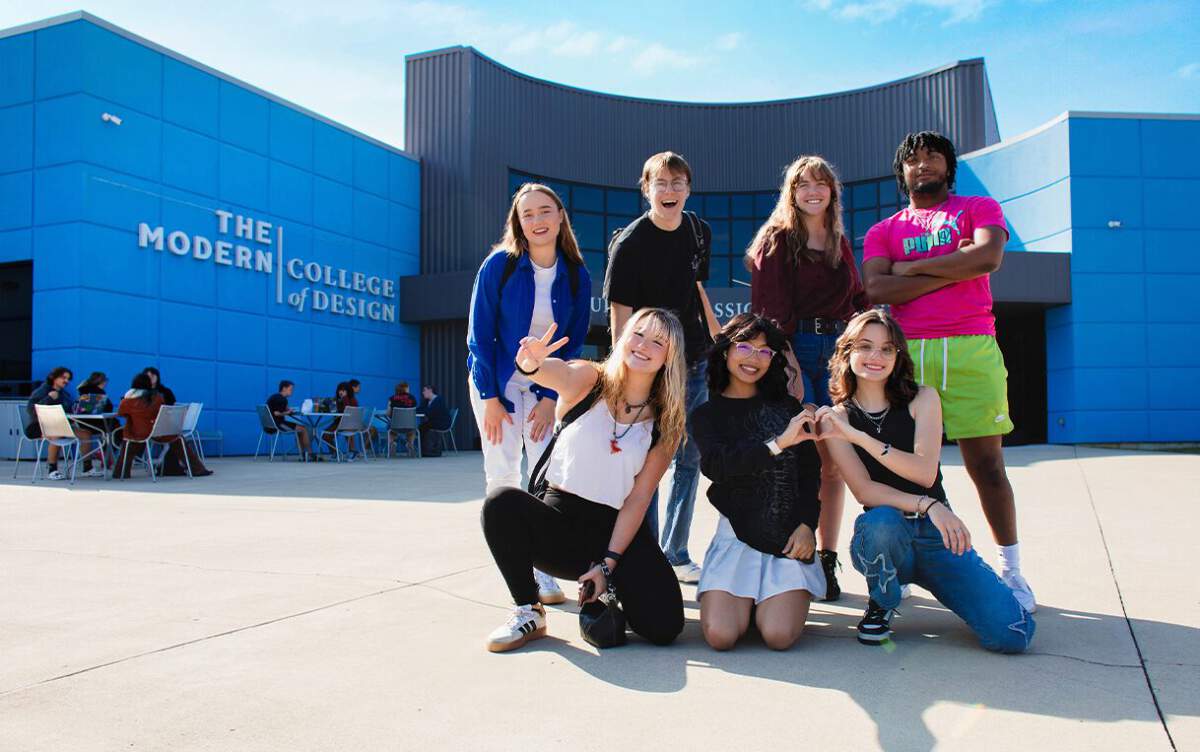
The Modern College of Design in Kettering has launched an exciting new campaign to encourage students to design their path to a creative future. They introduced new Career and Degree Pathways, Learning Styles, and Programs to prepare students for the most in-demand creative careers.

Through The Modern’s 2023 institutional assessment and improvement process, the management team identified opportunities to update its popular Design Program and expand two elective course sequences into programs focused on User Experience Design and Motion Graphics and Video Design. After reviewing employer demand and feedback, they found that the new programs would help students build stronger skills and portfolios in each area. These opportunities for improvement were incorporated into The Modern’s 2024 Institutional Assessment and Improvement Plan.
In January 2024, President Jessica Barry and Chief Academic Officer Korinne Toadvine developed a plan to update the Design Program and create new programs. Korinne worked with instructors, Program Advisory Committee members, which includes employers and alumni, and Director of Career Services Katie Looney to identify specific employer needs in each area and developed curricula to address those needs. Through this process, The Modern developed three programs that lead to an Associate Degree in Applied Business (AAB):
• Graphic Design AAB Program
• Motion Graphics and Video Design AAB Program
• User Experience Design AAB Program
Each program’s curriculum includes The Modern’s Core courses, where students develop a strong foundation in design and skills in the Adobe Creative Suite, design fundamentals, and photography; Career Pathway courses that prepare students for their specific design career; and General Education courses aligned with the design curriculum. Students will study professional development, develop a professional portfolio and personal brand, and gain industry experience through The Modern’s Externship course.
The Ohio State Board of Career Schools and Colleges, Accrediting Commission of Career Schools and Colleges, and US Department of Education approved the new programs earlier this year, allowing The Modern to offer residential, hybrid, and online options.
In preparation for the launch, The Modern promoted two full-time instructors to lead the new programs. Tess Cortés leads the Motion Graphics and Video Design Program. Tess is an award-winning digital media artist with more than 20 years of experience in higher education. She joined The Modern as an adjunct instructor in 2018 and was promoted to full-time instructor in 2022, teaching motion graphics and art courses. Paul Garcher is leading the User Experience Design Program. Paul’s professional experience spans user experience design, branding, art direction, and project management. He joined The Modern as a full-time instructor in 2020, teaching user experience design courses.
This fall, The Modern hired two user experience design adjunct instructors, Jelly Cramer and Carlos Portis. Carlos Herriott joined The Modern as an adjunct motion graphics and video design instructor. Korinne Toadvine intends to add a full-time instructor position to each program as the programs grow.
Offering multiple Associate Degree programs is new to The Modern, so President Jessica Barry and Creative Director Justin Morter developed a platform that makes selecting a program an easy 3-step process. First, students choose a Career Pathway that fuels their passion. Next, they select a Degree Pathway that aligns with their goals. Then, they pick a Learning Style that works best for them. Justin visualized the process and collaborated with User Experience Design Program Director Paul Garcher and Adjunct Instructor Chris Beach to design and launch a new website.
The Modern is now accepting applications for classes starting on January 8th, 2025. Please visit themodern.edu to learn more about these exciting new programs or to apply.
“Our future is bright because we continue to focus on what is most important–preparing students for the most in-demand creative careers in our region,” said President Jessica Barry. “Adding new program options will improve student portfolios and expand career opportunities.”

We want to show gratitude for all the Founding Sponsors of Link: Anthem Blue Cross and Blue Shield, Bonbright Distributors and New Belgium Brewing Company, CareSource, City of Dayton, Five Rivers MetroParks, Montgomery County, PNC, Premier Health, Public Health – Dayton and Montgomery County’s Creating Healthy Communities Program, Sinclair College and the University of Dayton for their support.